The Horizon Is Not Innocent
How horizons appear across my work
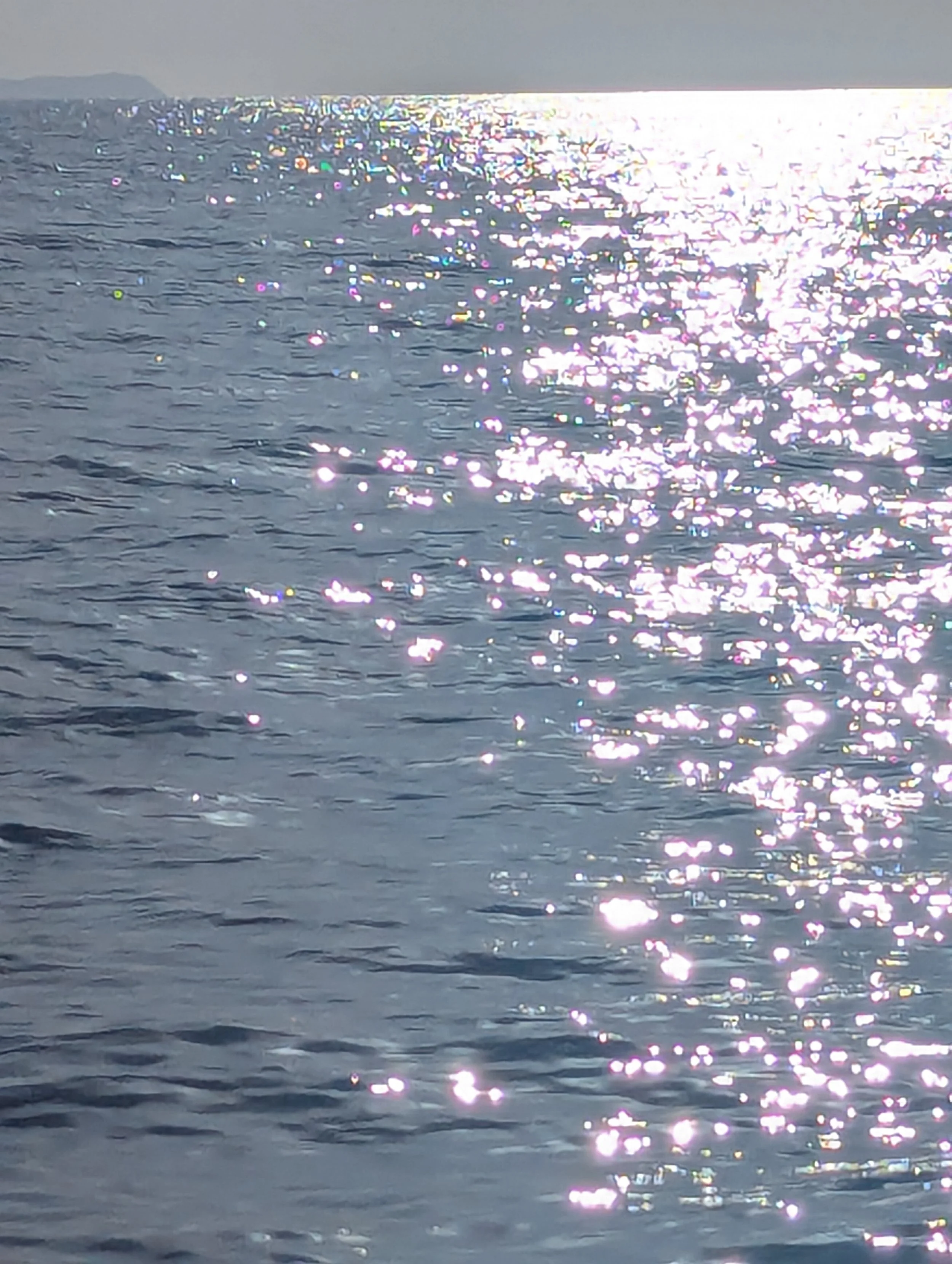
The horizon runs quietly through multiple series, sometimes obvious, sometimes barely there. In New Horizons, it’s more direct: abstract windows into the sea that capture the colours, textures, and feelings that being on the water gives me. These pieces are small squares, but inside them the horizon is a way of holding space — a balance point between depth and openness.
In other series, the horizon appears as bands of colour, stitched divisions, or subtle shifts between texture and smoothness. It might be the divide between forest and sky, coast and water, data and image. Even when it’s not literal, that sense of “edge” is there: a reminder that we’re always standing somewhere specific, looking out.
Sea horizons vs land horizons
Horizon at sea is different from horizon on land. At sea, the line feels pure, uninterrupted: just water and sky. It can be overwhelming, almost abstract, especially when the light is soft and the colours blur. There’s a sense of exposure and freedom — nothing between you and that meeting of elements.
On land, horizons are busier. Trees, buildings, hills, human marks interrupt the line. The horizon becomes layered with history: paths, fields, rooftops, all the ways we’ve shaped the landscape. Where a sea horizon asks you to sit with vastness, a land horizon often asks you to notice detail and memory. In my practice, I move between these two: the open, elemental horizon of the sea and the story‑rich horizon of lived places.
Selected works and their context
In the New Horizons works, each 30cm x 30cm piece acts like a small frame around a feeling. They are abstract windows into the sea, holding specific palettes — blues, greys, muted greens, sometimes unexpected warmth — that reflect particular moments on the water. The textures, whether stitched, layered, or painted, echo currents, wind, and the quiet pulse of waves.
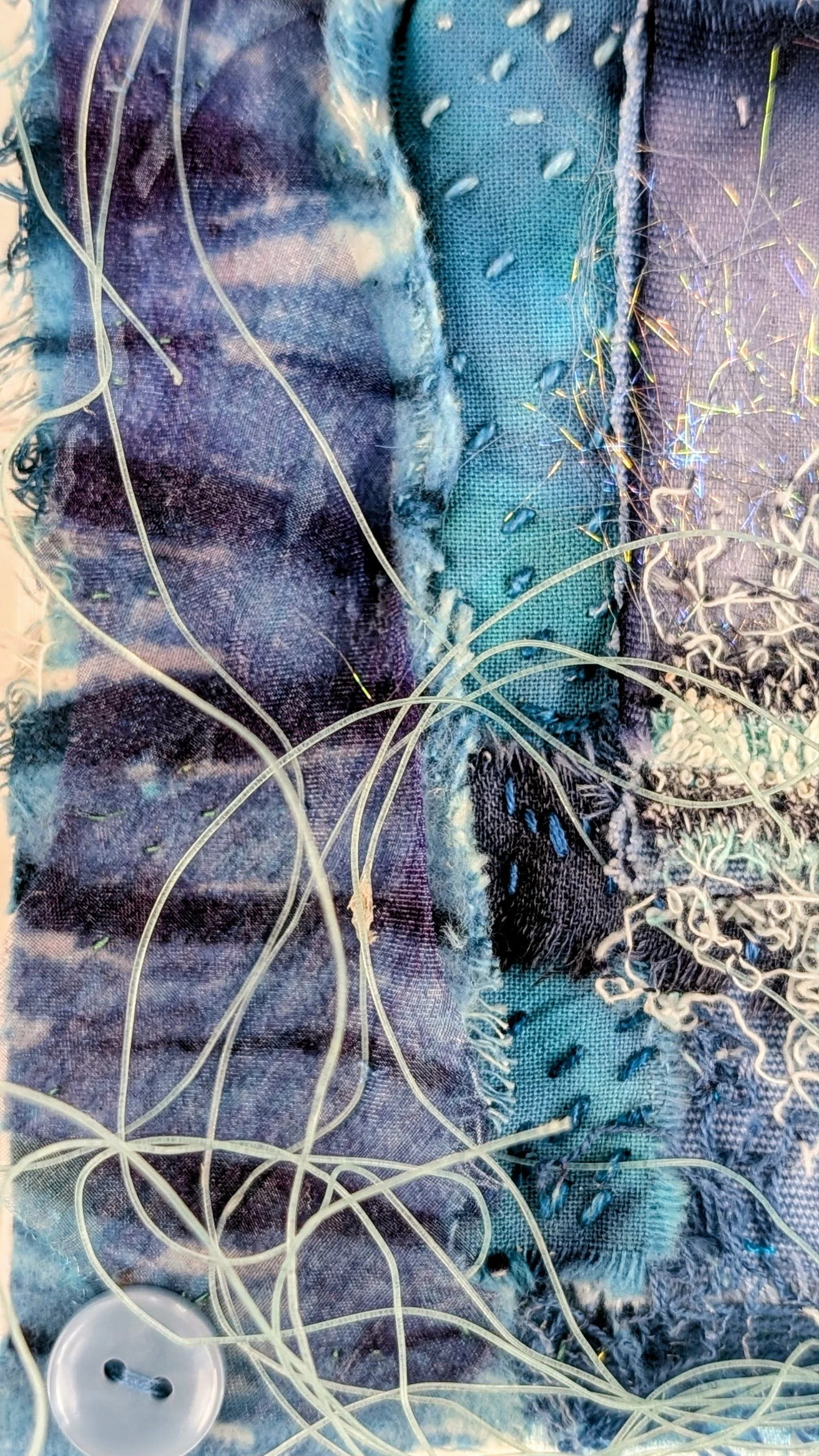
These pieces can be viewed with or without perspex, which subtly changes how the horizon is experienced: with perspex, there’s a sense of looking through; without it, a more direct encounter with surface and stitch. The incorporation of mixed media continues my ongoing cry for awareness, if not action: we need to care about our seas — what we put in them, what we take out of them, and how we value them.
Alongside these, a further collection of more intimate works, just 12cm x 12cm, presses that question even closer. They further interrogate our use of materials while rejoicing in and celebrating the sea itself. In such small formats, the horizon becomes almost a heartbeat: a fine line of orientation in a tiny field of colour and texture, asking the viewer to come close, to really look.
Why I keep returning to the horizon
I keep returning to the horizon because it stays honest with me. It never lets me forget scale — how small we are next to sea and sky — but it also never lets me forget agency. The horizon doesn’t move on its own; it changes because light changes, because we move, because the world we’re making shifts.
In a time of ecological crisis, horizons feel like moral lines as much as visual ones: how far are we willing to go, and what won’t we cross? My work with horizons is a way of holding those questions gently but insistently. I hope that when people encounter these pieces, they feel both soothed and challenged, invited to rest their eyes on the line — and then to think about what lies beyond it, and what part they might play in shaping that future.
