Making the Invisible Visible
Kelp - why I have made work about Seaweed
Kelp is not the first thing most people think of when they imagine the sea. We picture boats, beaches, markets, sunlit stone; stories of trade, travel, and holidays. But beneath the surface, not far from the shore, there are forests of their own. Underwater forests that quietly hold coasts together, feed the water, shelter creatures, and help capture carbon. These are kelp forests. And they are under pressure.
My own journey into kelp began one cold winter’s morning in February, with a conversation that led to a collaboration where science meets art. A friend, a PhD researcher, invited me to help take samples from columns of seawater along a 100‑mile stretch of coastal waters in the South East of the UK. Huge amounts of data were being collected to understand how pollutants in the sea affect the growth and reproduction of kelp – underwater forests that act as carbon sinks and biodiversity hotspots for more than a thousand marine species. Standing there, watching her measure and record, I began to see kelp differently. It wasn’t just “seaweed”; it was a whole world.
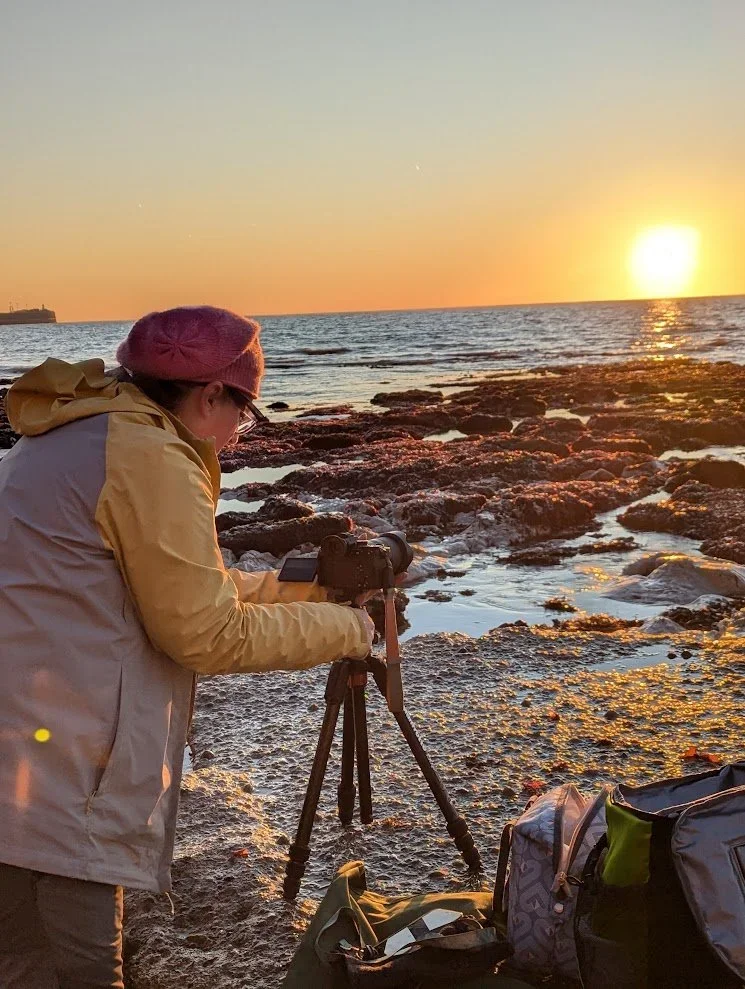
Kelp is not just a plant; it is an ecosystem. In coastal waters, kelp forms dense stands that slow waves and protect shorelines, reducing the energy of storms and surges. In the UK’s South East, around 96% of this kelp has been lost due to storms and the impacts of the fishing industry. Kelp forests capture carbon, taking it from the water and sometimes storing it in the seabed, far below the atmosphere. They recycle nutrients, taking up nitrogen and other elements, helping to keep coastal systems in balance. They also offer economic potential: restored kelp forests can support fisheries, tourism, and blue‑economy innovation. Globally, kelp farming is growing, and seaweed markets are forecast to expand significantly in the coming years. For me, these facts transformed kelp from background texture into a central character.
The challenge I was given was to illustrate this research: to respond visually to data being gathered along that 100‑mile stretch, and to the idea of columns of water being studied over time. The three main kelp species being monitored provided the forms and colours. The data became textures. The concept of vertical water columns was never far from my mind as I worked. Through this, The Kelp Collection was born in mid‑July 2025, and it has been evolving ever since, including the Second Sea/See series, which continues this exploration.
One of the first and most demanding pieces was DA BEAST: 85cm by 60cm, made from heat‑pressed data, shibori‑dyed reclaimed fabrics, and hand embroidery. It earned its name through the sheer amount of time, energy, and layering it required. Another work, Kelp Forest, combines acrylic on canvas, heat transfer, and hand stitch to evoke the density and delicacy of underwater growth. Latissima Sunset – working with acrylic, heat‑pressed textiles, and embroidery – reflects both hope and a warning: that kelp forests can return, but only if we choose to act.
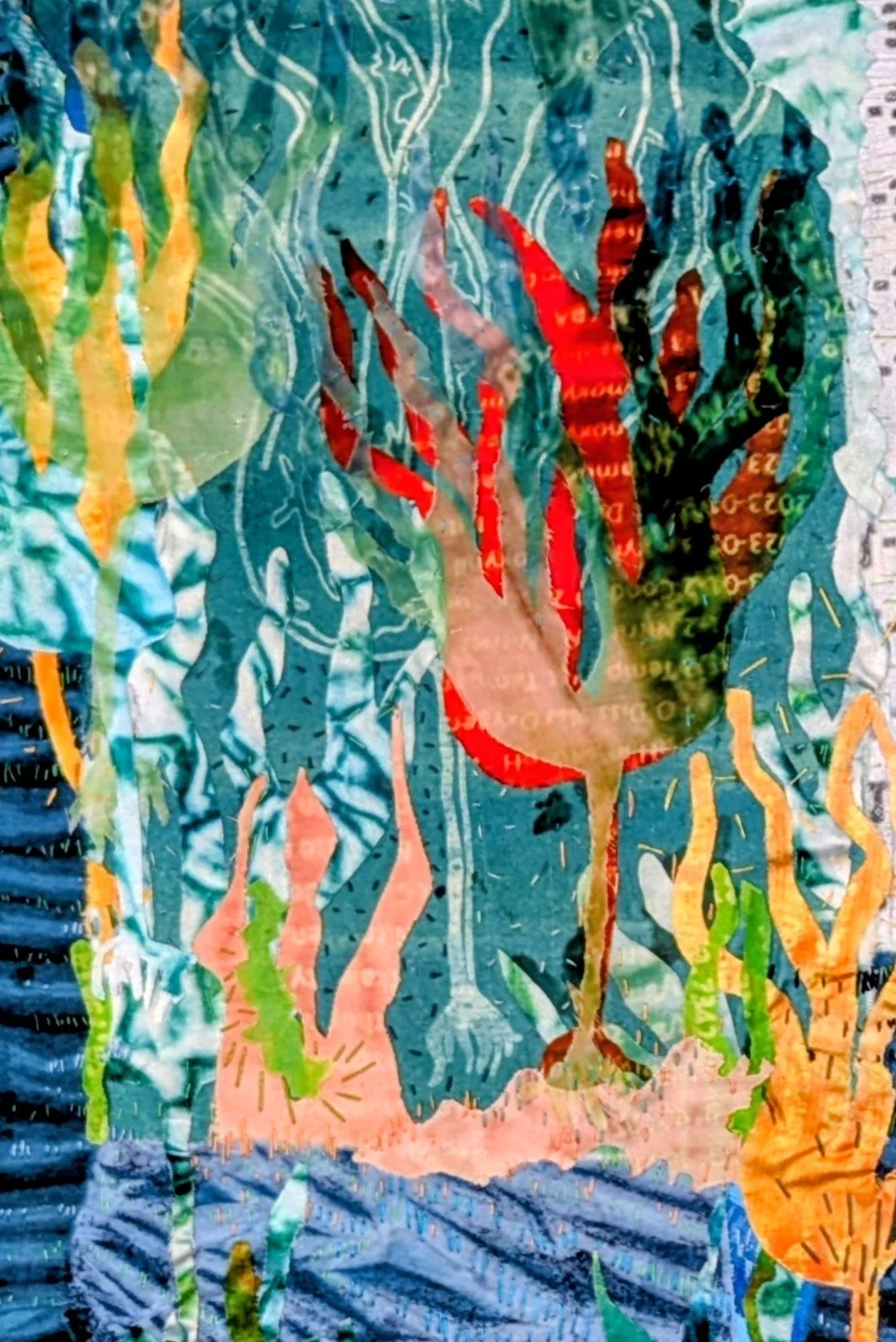
Detail of DA BEAST
As the collaboration deepened, I learned about a hidden barrier: Suspended Particulate Matter (SPM) – fine material that clouds the water. Sediment from rivers, particles from construction, runoff from roads and fields all end up in the sea. When water is full of these particles, it becomes less clear. Light is blocked. Kelp, which needs light to grow, struggles. By mapping the distribution and variability of SPM, researchers can understand how kelp is affected and what “safe” levels might look like for reproduction and growth. This has implications far beyond one coastline; it speaks to many coastal regions around the world.
The Mediterranean, for example, is one of the world’s most storied seas, shaped by movement, exchange, and conflict over millennia. Beneath its familiar coastlines lie countless untold stories of people, cultures, ecosystems, and traditions. Kelp is part of those stories too – tied to local knowledge in some places, emerging as a newly recognised resource in others. Understanding kelp here isn’t just biology; it is about heritage, community, identity, and how we choose to live with the sea in a changing world.
All of this science raises a simple, urgent question: what happens when the hidden barrier of SPM gets in the way of kelp recovery? If the water is too cloudy, kelp may not grow fast enough, reproduce strongly enough, or spread. Forests may fail to return, or slowly disappear. The research is both scientific and practical: if we understand the barrier, we can start to address it. That means water regulation, better water quality, controlled runoff, and managed coastal construction. It also means integrated land‑sea management: catchment‑to‑coast thinking that treats rivers, fields, towns, and shorelines as one connected system. Kelp cannot be protected in isolation from what happens upstream.
This is where my work with reclaimed fabrics comes in. Using only reclaimed materials – central to my practice – I combine research data and the forms of three kelp species to create pieces that share this science through art. Heat‑pressed data becomes pattern; stitch traces currents and growth; colour holds both depth and light. DA BEAST has already been exhibited in London and Brighton and will soon be part of a permanent collection at SeaFront Gallery in Worthing. Kelp Forest has appeared in an Eco Action exhibition in London and will travel to Canada for the World of Threads Festival towards the end of 2026. Latissima Sunset sits within the Second Sea/See series, carrying that balance of beauty and warning.
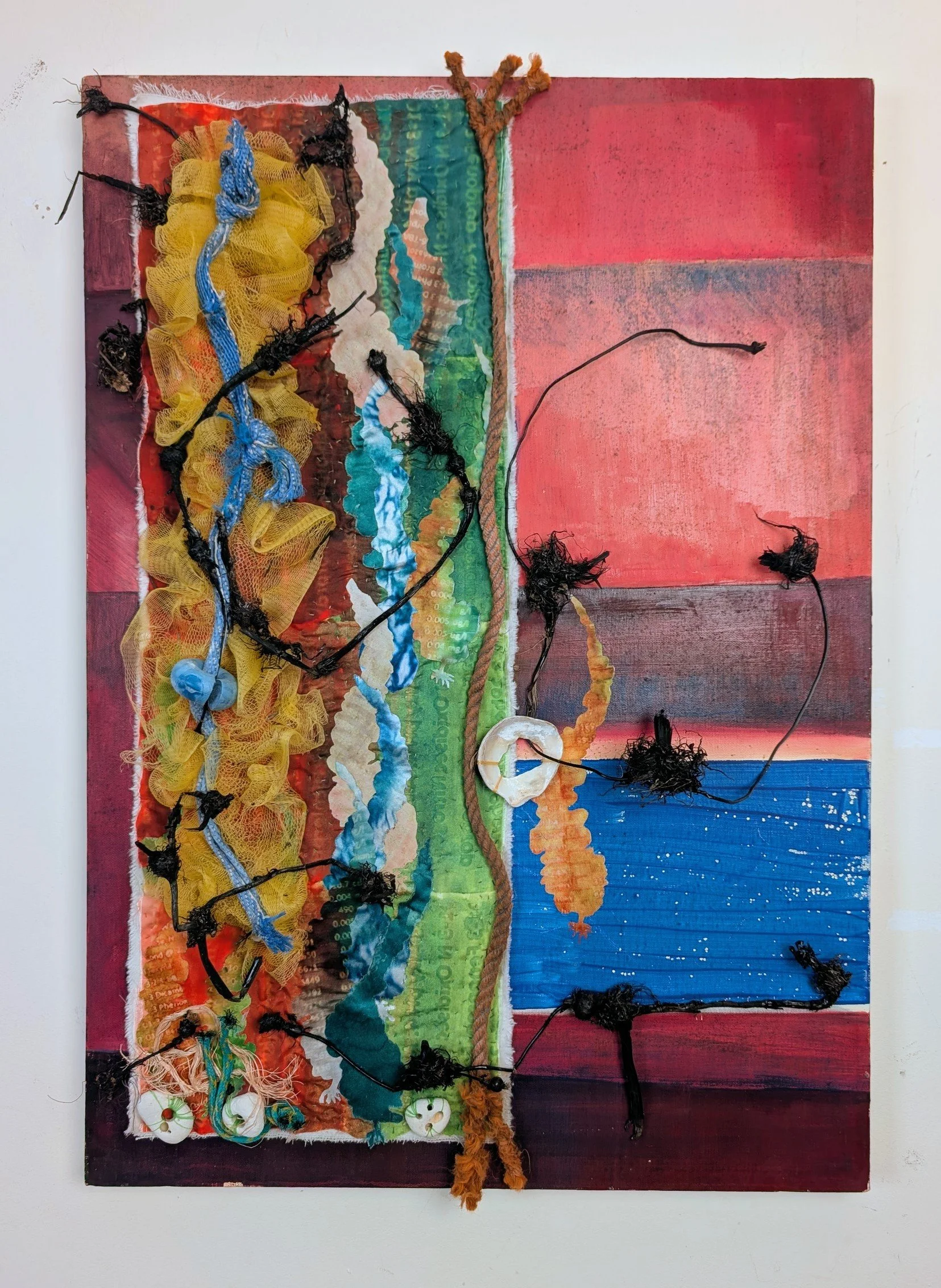
Ultimately, I make work about kelp because it sits at the crossroads of so many concerns: climate, biodiversity, coastal protection, livelihoods, and our relationship with the sea. Science tells us what is happening to these underwater forests; art can help us feel why it matters. When viewers encounter these pieces, I hope they sense both the majesty and vulnerability of kelp – and perhaps begin to care about seaweed in a way they never expected.