Where the Sea Meets Cloth.
Life on a small boat changes how you see, and The Sail Collection is my way of stitching that experience into cloth.
The collection began in an unexpected place: as backdrops for a New York fashion show aboard a large vessel. At the time, I was thinking about atmosphere and setting, how textiles could hold the presence of the sea without overwhelming the garments they sat behind. But as the weeks on the boat unfolded, that initial brief quietly transformed into something else — a meditation on the sea itself, on materials, and on what it means to care for the environments we pass through.
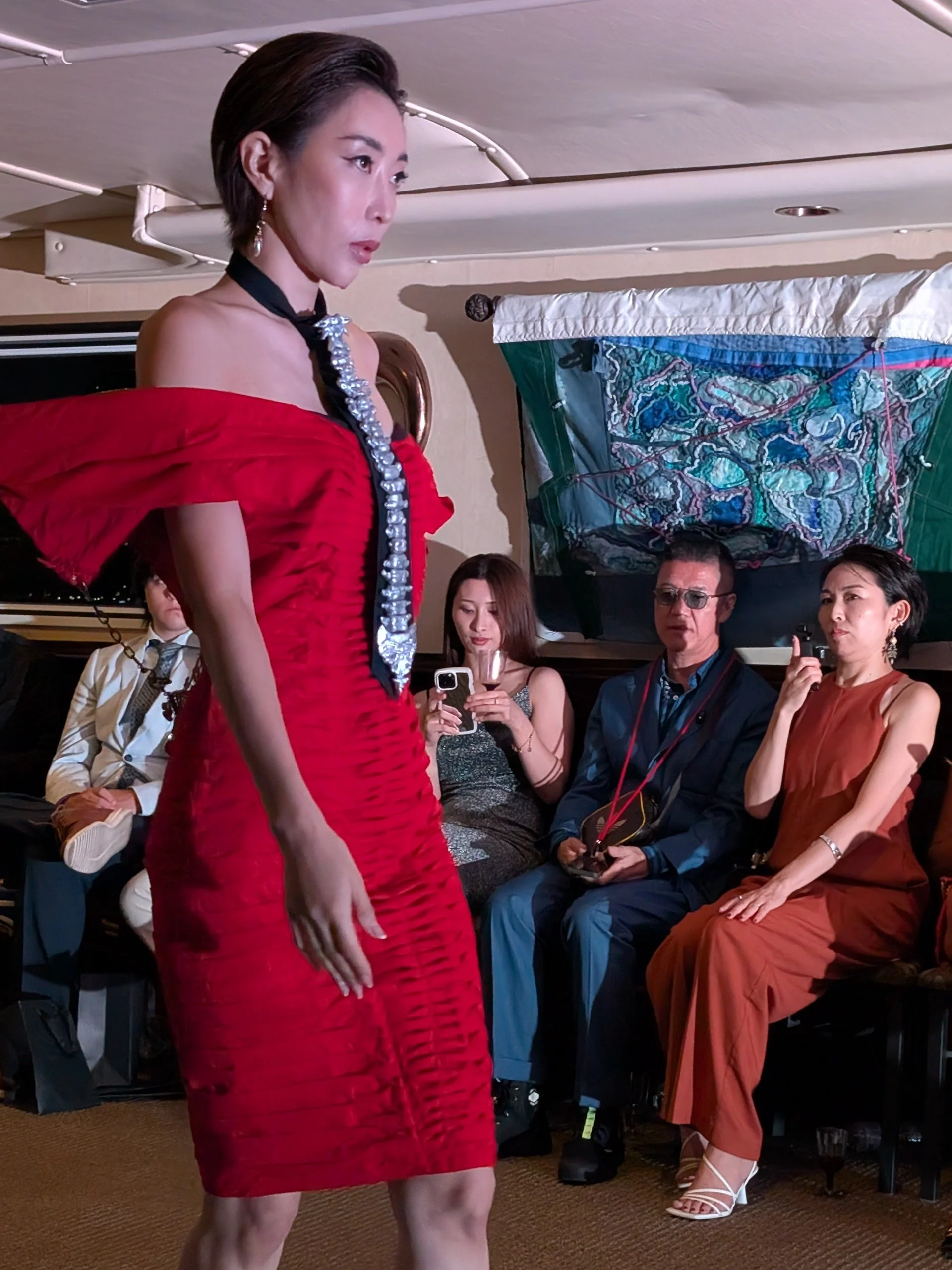
Living for weeks at sea with family compresses life into a small moving space. You share close quarters with each other and with the elements. Weather isn’t a distant forecast; it is the immediate condition of your day. You feel the sea in your bones — in the pitch of the hull, the pull of the tide, the way light changes on the surface hour by hour. You notice things on a boat that you easily miss on land: the rhythm of waves against the hull at night, the fine salt that settles on everything, the subtle differences in colour as you move along the coast, and the sheer amount of debris the sea now carries.
It was in this context that The Sail Collection began to deepen. Made from recycled fabrics — old sails, offcuts, and boat regalia — the pieces draw directly from the material language of the vessel itself. Some have been hand-dyed using Japanese Shibori, the cloth folded, bound, and immersed so that pattern becomes a record of compression and release. Others are embroidered with variations on Boro stitch, a Japanese repair tradition that turns mending into visible, rhythmic texture. Together, these processes carry the passion I have developed for being on the sea: its discipline, its unpredictability, its beauty.
Visually, strong vertical and horizontal lines run through the work, though they are rarely centred. They echo rigging, masts, rails, and the structural geometry of a boat, but there is always a slight offset — a reminder that life at sea is never entirely stable, that balance is something you keep adjusting. Layered colours ripple and shift like the ocean itself, suggesting currents, shadows, and light on water. In some pieces, the palette leans into deep blues and greens; in others, it catches the more surprising tones of rope, sunshine, and discarded plastics.Through process-led making, these works transform discarded textiles into vessels of reflection. They bear witness to fragile marine environments and our shared responsibility to the Blue Planet. Each sail-inspired piece carries the memory of journeys taken, but also the reality of what is now floating with us: marine plastics, fragments of nets, and other detritus that should never have been there in the first place.
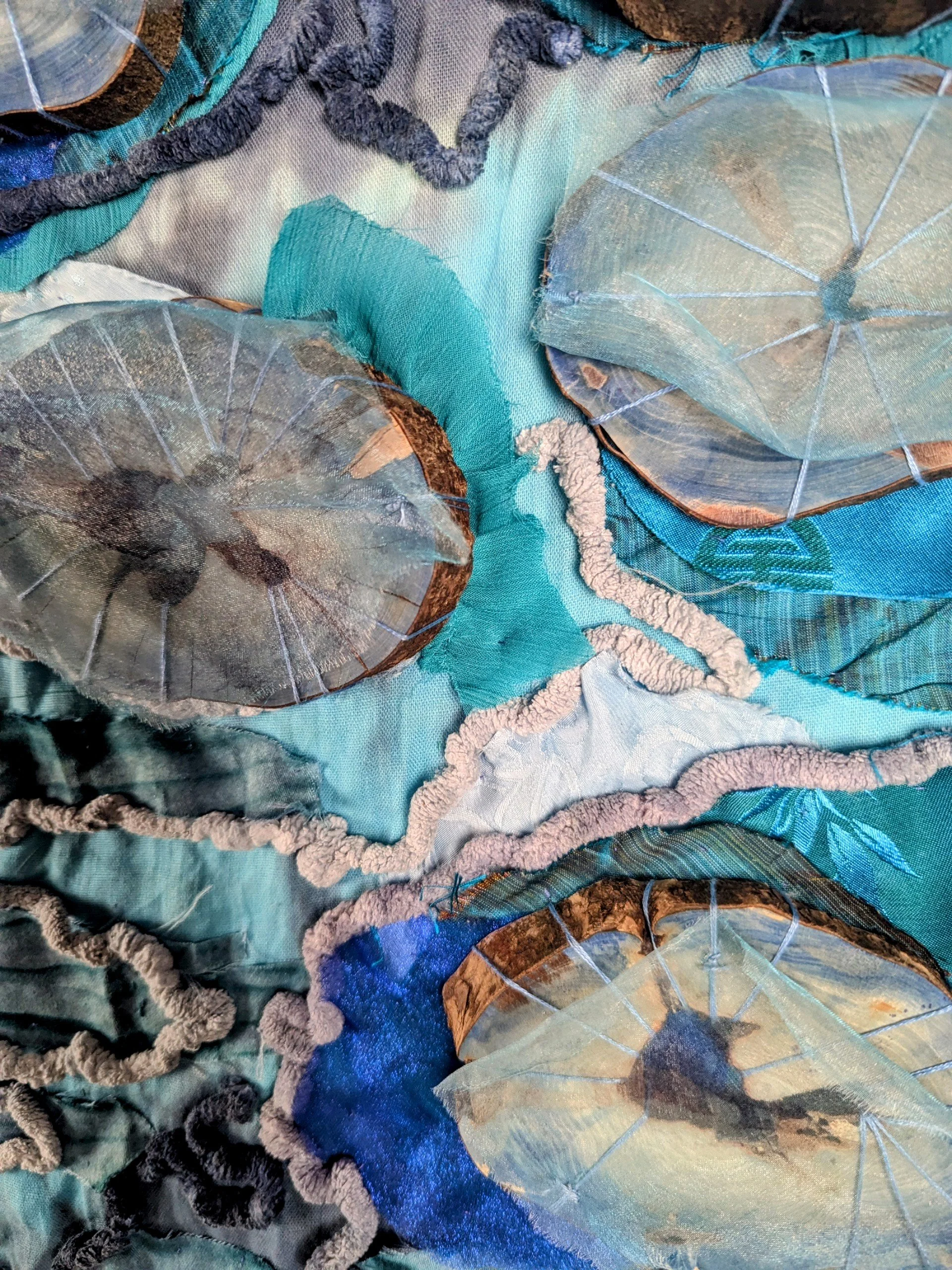
Detail
Are We Blind? is a recent addition to the series and marks a slight shift in focus while remaining firmly anchored in the same concerns. Constructed using an unwanted household blind as its base, the material itself prompted the title and its underlying question: what are we doing with the volume of waste we generate, and how long can we afford to ignore the consequences? The blind, repurposed into a quilt-like surface, plays on the idea of seeing and not seeing. It asks whether we are choosing to look away from the environmental impact of our habits, even as evidence accumulates around us.
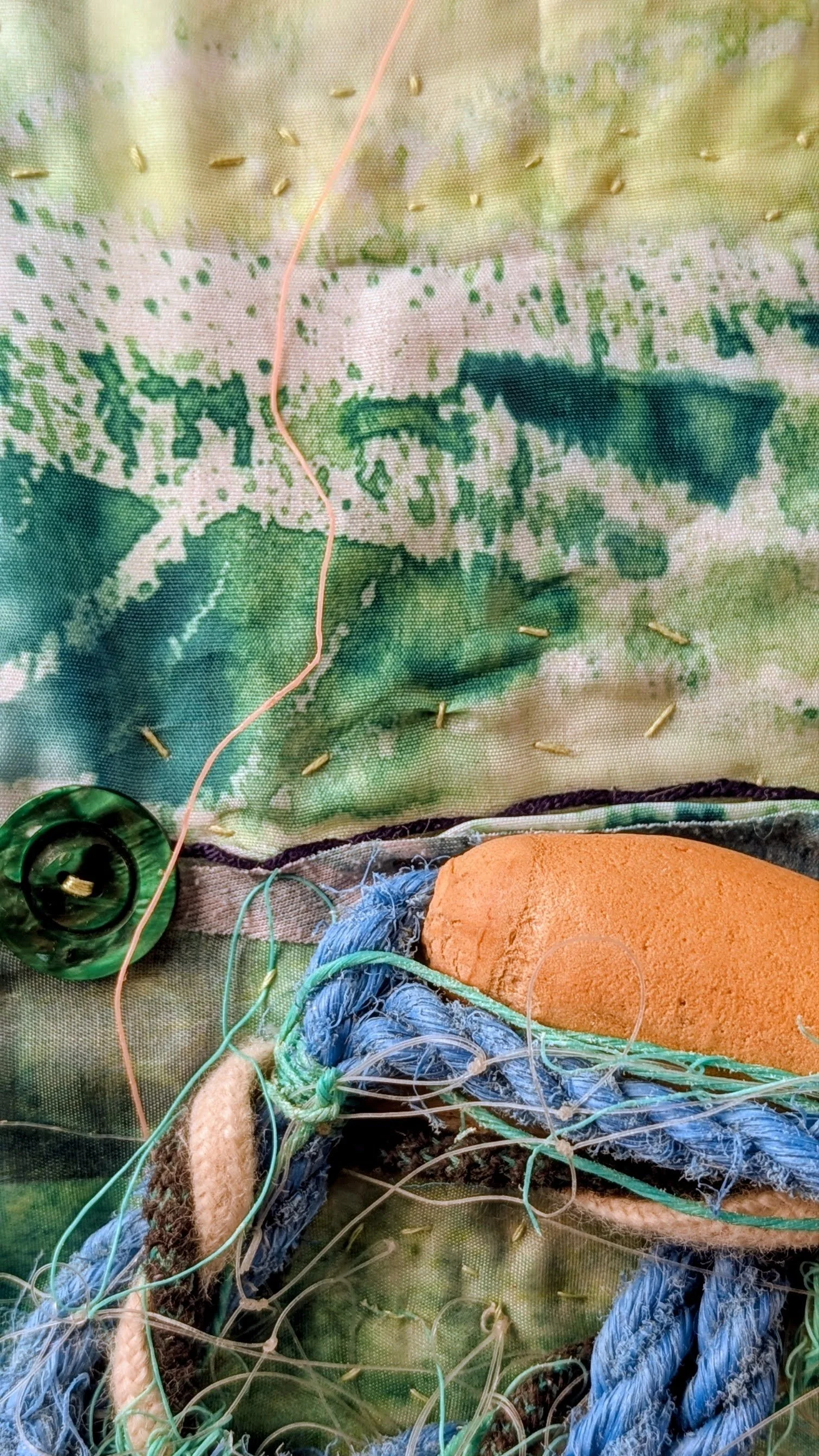
Throughout The Sail Collection, my work consistently asks questions of the viewer, but it is equally rooted in love. The pieces are born from profound and exhilarating experiences at sea: the majesty of open water, the movement of swells, the sudden stillness of a calm, the way the horizon can both reassure and unsettle. The ocean’s unpredictability remains central to my practice, and I hope that sense of wonder is carried within the work alongside its challenge.
In the end, The Sail Collection is about life on a small boat and the work it made possible — work that holds together the intimacy of family voyages, the tactile reality of sails and rope, and the broader question of how we choose to live with the sea. It is an invitation to step into that space, feel the pull of the water, and ask ourselves, gently but insistently, where we are heading.